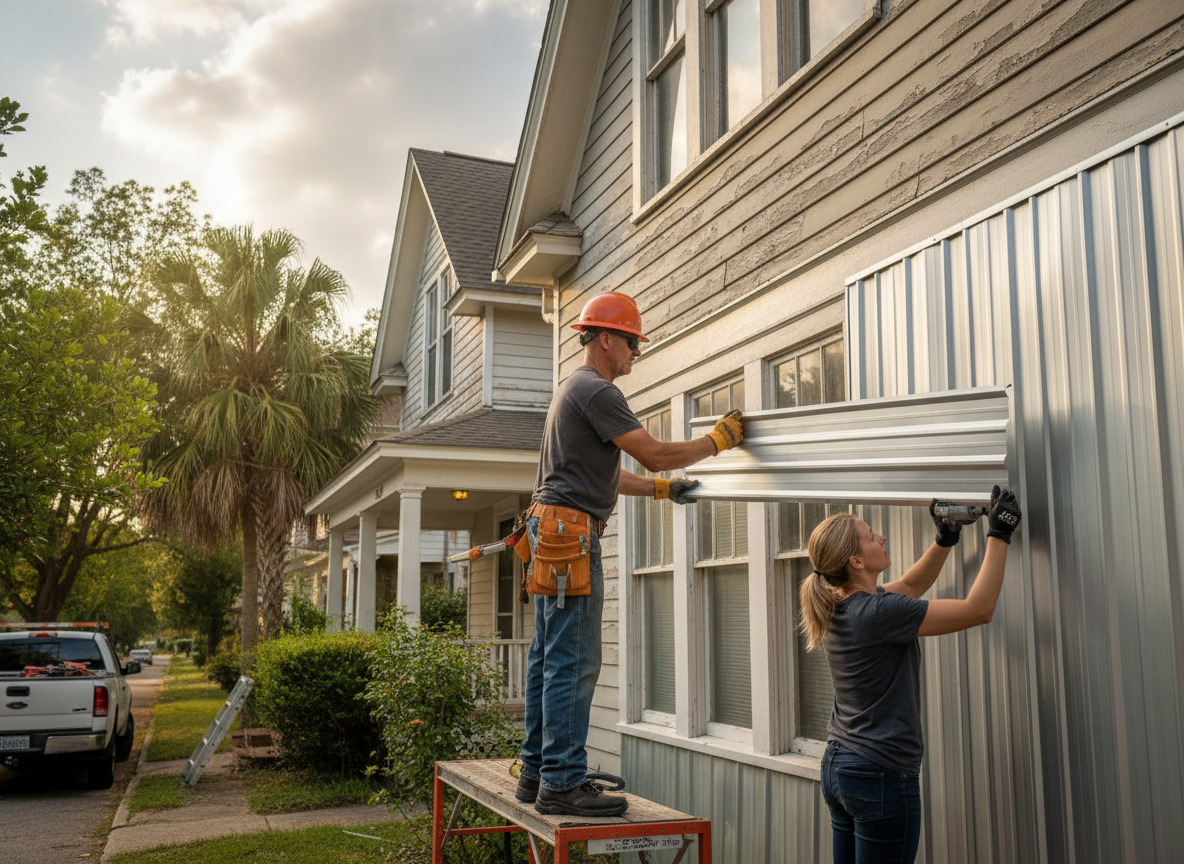
Aluminum siding remains common on mid-century homes throughout Montgomery and nearby Cincinnati suburbs where builders used it heavily from the 1950s onward. These panels expand and contract with Ohio's wide temperature swings, so proper nailing and expansion gaps prevent buckling at seams and corners. Older stock often shows denting from hail or tree branches plus fading on south-facing walls that receive direct sun year after year.
When replacing sections, crews match the original profile and color as closely as possible because full re-siding can trigger permit reviews in Montgomery. Removing layers sometimes reveals deteriorated sheathing or missing housewrap that must be corrected before new panels go up. Soil around many properties holds moisture after heavy rains, so flashing at the base keeps water from wicking behind the new siding.
Homeowners in the area frequently ask about painting aluminum rather than replacing it. Proper cleaning and specialized primers extend finish life, yet peeling returns quickly if underlying corrosion from road salt or lawn chemicals is not addressed first. Voltiva Systems inspects fastener integrity and panel overlap during every service call because loose pieces allow wind-driven rain to enter wall cavities.
Technician insight
In Montgomery, the thing that catches most people out with aluminum siding is how homes built on clay-heavy soil shift slightly each freeze-thaw cycle, loosening nails and creating wavy panels that homeowners mistake for simple dents.
Buckled Panels on North Side
A Montgomery homeowner noticed wavy aluminum siding after a harsh winter. Inspection showed frost heave had pushed the foundation slightly, loosening fasteners along the bottom course. Crews replaced the affected panels, added proper expansion gaps, and secured the base with new flashing. The siding now lies flat and drains correctly.
How it works
- 1
Site Assessment
Technicians examine existing aluminum panels, fasteners, and underlying structure for damage or improper installation.
- 2
Material Selection
Matching profiles and colors are chosen to blend with the home's original appearance and local architectural styles.
- 3
Preparation and Repair
Old sections are removed, sheathing is repaired if needed, and new flashing is installed at transitions.
- 4
Installation and Finish
Panels are hung with correct spacing, sealed at edges, and tested for secure attachment before cleanup.
Pricing
Upfront quotes provided after on-site inspection; final cost depends on square footage, access, and any hidden repairs discovered.