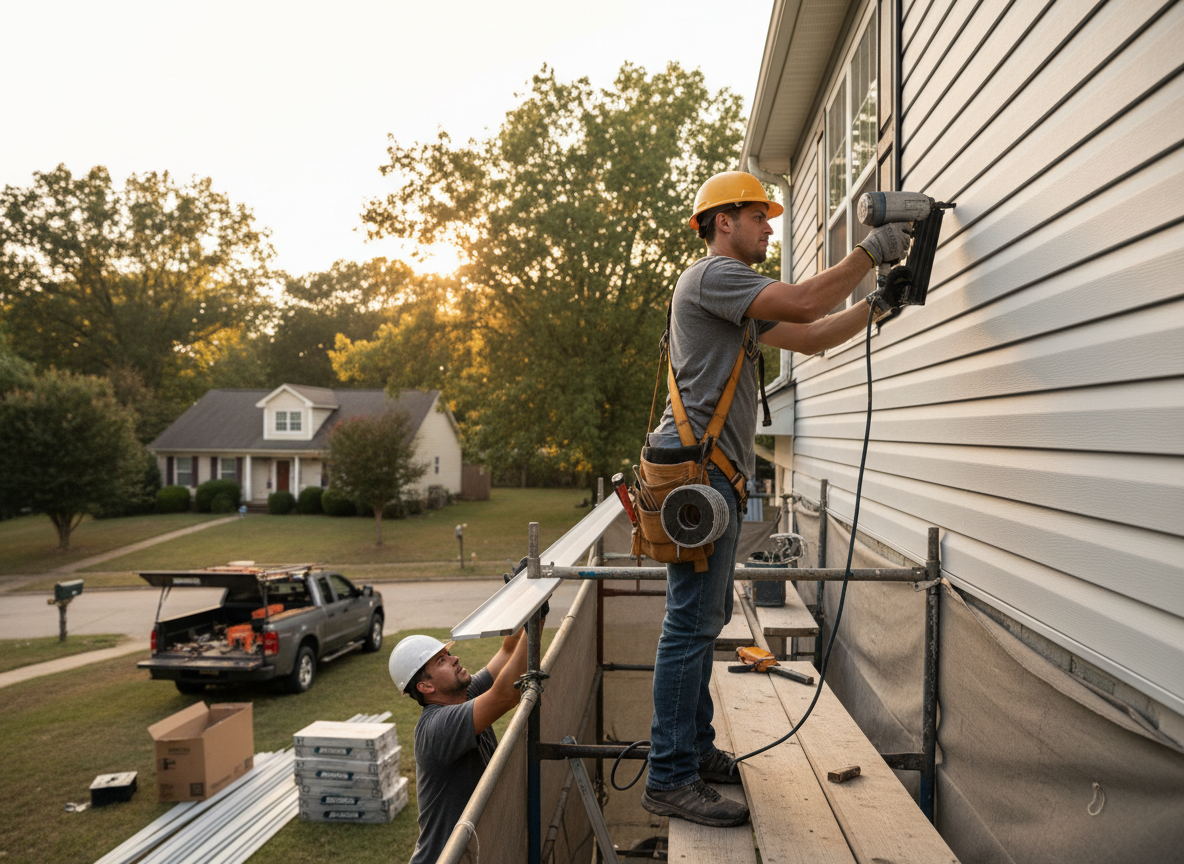
Montgomery sits in Hamilton County with many post-war and mid-century homes that show wear on original wood or aluminum siding. Homeowners often need full replacement when seams open or insulation fails behind the panels. Voltiva Systems inspects sheathing and housewrap before any new material goes up because hidden moisture damage is common after decades of Midwest freeze-thaw cycles. Proper flashing around windows and doors prevents water from reaching the framing, a detail that matters on the sloped lots found in many Montgomery subdivisions.
Vinyl, fiber cement and engineered wood each behave differently on these older frames. Fiber cement holds up better against the humidity that builds in summer, while vinyl expands and contracts more in winter. Voltiva Systems matches the new siding profile to the existing trim so the finished look stays consistent with neighboring houses. Edge cases include homes with brick accents or complex rooflines where custom cuts and extra fasteners are required to keep everything straight and weather-tight.
Code updates in Hamilton County now require specific nailing patterns and weep-hole placement on new installations. Skipping these steps can fail inspection or lead to callbacks when wind-driven rain hits. Voltiva Systems pulls permits when the scope requires it and schedules final checks so the homeowner is not left dealing with the county. The crew also removes old material completely rather than layering over it, which keeps the wall thickness correct for door and window reveals.
Technician insight
In Montgomery the thing that catches most people out with residential siding contractors is the hidden rot behind the original aluminum on 1960s ranches. Those homes sit on clay-heavy soil that holds moisture, so once the wrap fails water sits against the sheathing for years. Homeowners assume a simple overlay will fix it until we open the wall.
Siding Replacement on a Montgomery Split-Level
The homeowner noticed drafts and peeling paint along the north wall. We found water-damaged OSB behind the original siding where the original wrap had torn. We replaced the affected sheathing, added new housewrap and flashing, then installed fiber-cement panels that match the rest of the house. The wall now stays dry through winter and the interior temperature stays more even.
How it works
- 1
Site Assessment
Voltiva Systems walks the full exterior, checks for rot, measures every wall, and notes existing ventilation and insulation details.
- 2
Material Selection
Homeowners review samples matched to the house style and neighborhood norms, with attention to color retention and maintenance needs.
- 3
Preparation and Removal
Old siding comes off, damaged sheathing is replaced, and new housewrap plus flashing are installed before any new panels go up.
- 4
Installation and Trim
New siding is hung with correct spacing and fasteners, then trim, caulk, and vents are finished to match the original architecture.
- 5
Final Walk-Through
The crew reviews every elevation with the homeowner, points out maintenance access points, and leaves contact information for any follow-up questions.
Pricing
Upfront written quotes after the on-site assessment; final price depends on material choice, square footage, and any hidden structural repairs found during removal.