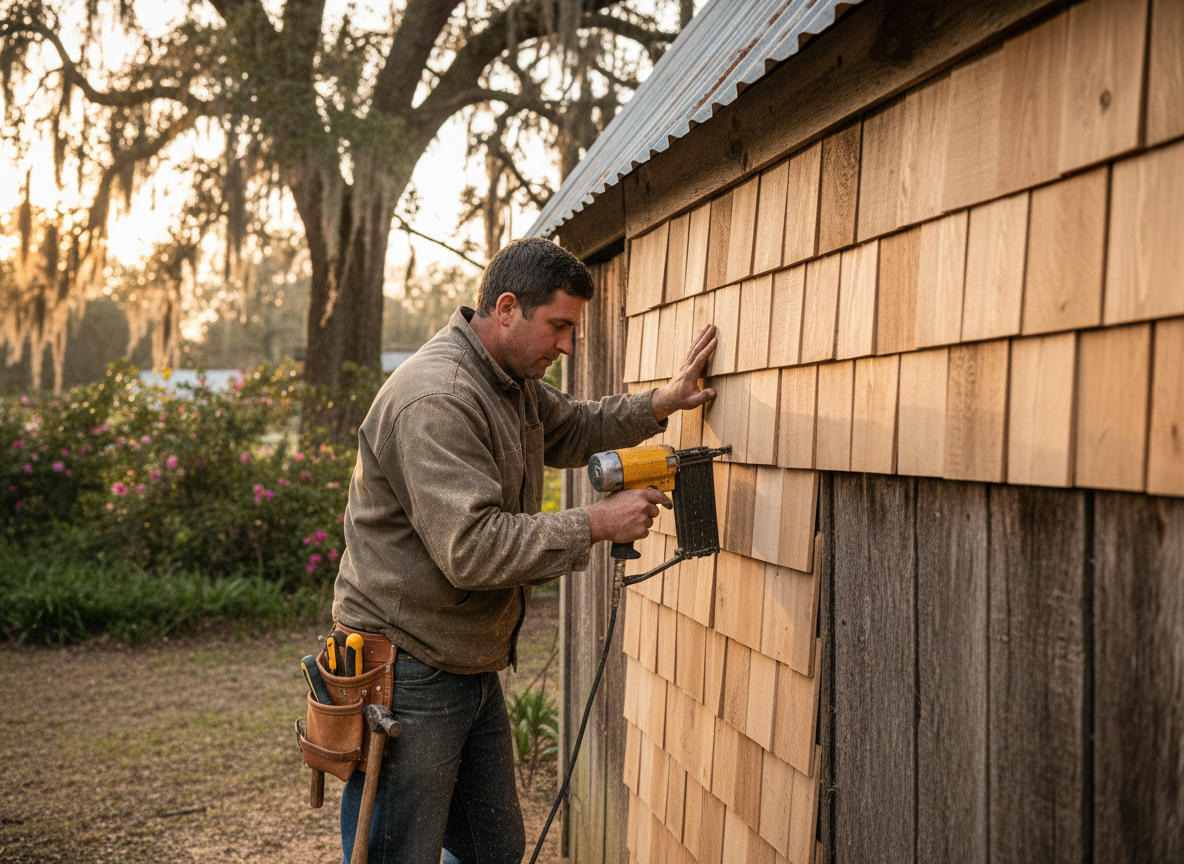
Sheds in Montgomery and surrounding Hamilton County neighborhoods often sit on properties with clay-heavy soils that expand and contract through Ohio winters. This movement stresses siding joints and fasteners, especially on older outbuildings common in the area. Vinyl and fiber cement panels hold up better than wood when moisture from summer humidity meets sudden temperature drops. Proper underlayment and ventilation prevent rot that starts at the base where snow piles against the structure.
Homeowners frequently overlook how local building setbacks and drainage rules affect shed siding projects. In Montgomery, sheds near property lines must maintain clearance that allows air flow and prevents water from pooling against the siding. Metal siding requires specific screw patterns to avoid oil-canning from wind gusts that sweep across open lots near the Little Miami River corridor. Skipping these details leads to callbacks when panels loosen after the first hard freeze.
Material Choices for Ohio Sheds
Fiber cement performs reliably on sheds exposed to road salt spray from nearby Montgomery roads. Engineered wood with factory primer resists the mildew that thrives during prolonged spring rains. Vinyl remains popular for budget projects but needs expansion gaps adjusted for Ohio's temperature swings. Always inspect existing sheathing for soft spots before new siding goes on.
Common Installation Pitfalls
Fasteners driven too tight on metal panels crack under expansion. Skipping flashing at roof-to-wall transitions lets water wick behind the siding during heavy downpours. On sloped lots common in eastern Montgomery, grading the ground away from the shed base before siding work prevents future moisture damage.
Technician insight
In Montgomery, the thing that catches most people out with shed siding is the clay soil that shifts with freeze-thaw cycles along the river corridor, causing panels to buckle if the base isn't flashed and anchored to allow slight movement without pulling fasteners.
Shed Siding on Shifting Base
A Montgomery homeowner noticed buckling panels on a backyard shed after winter. We found the clay soil had heaved the foundation slightly, stressing the siding seams. We added proper flashing at the base, used flexible fasteners, and reinstalled fiber cement panels. The siding now accommodates seasonal movement without repeating the damage.
How it works
- 1
Site Assessment
Measure the shed, check foundation stability, and note drainage patterns around the structure.
- 2
Material Selection
Review siding options against local weather exposure and existing shed condition.
- 3
Surface Preparation
Remove old siding, repair sheathing, and apply moisture barrier where needed.
- 4
Installation
Hang new panels with proper fasteners, flashing, and ventilation details.
- 5
Final Inspection
Check seams, trim, and drainage before cleanup and walkthrough.
Pricing
Pricing varies by shed size, material selected, and site access conditions.