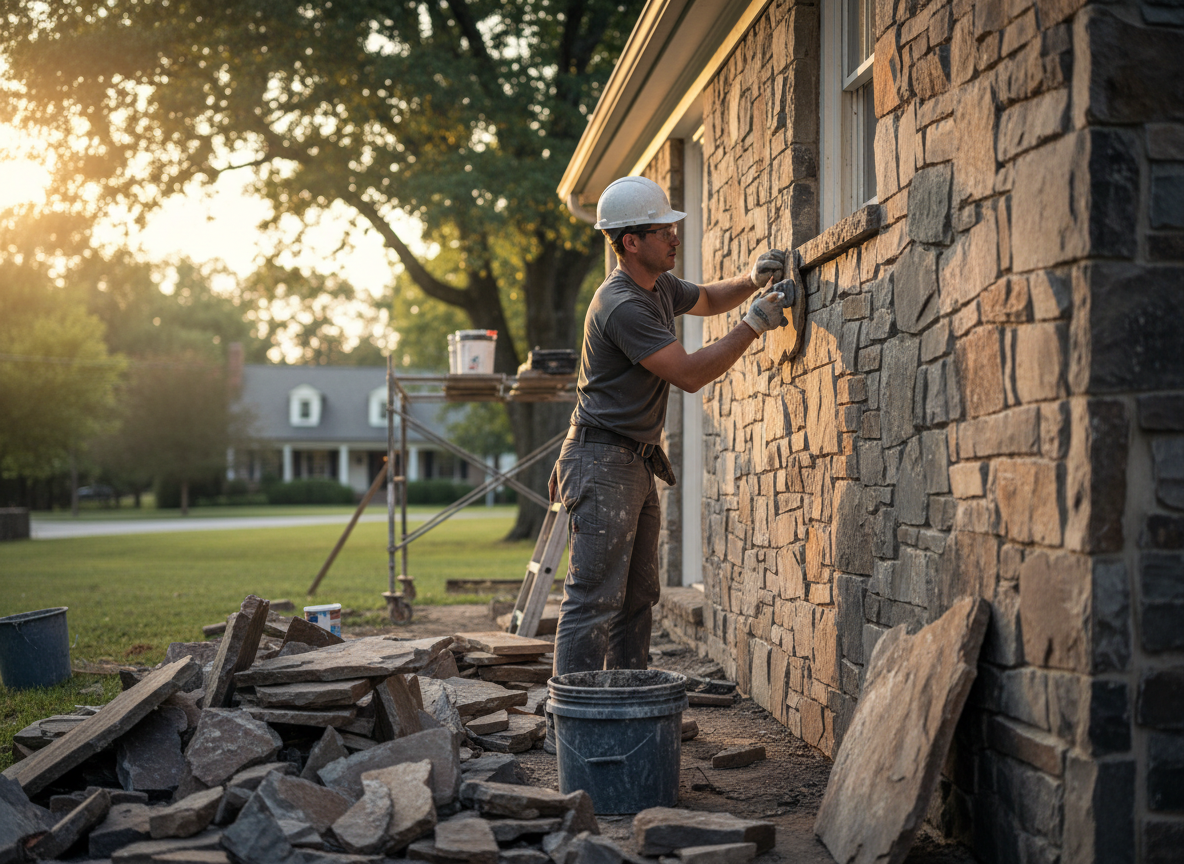
Stone veneer siding adds weight and requires a solid substrate, especially on homes built before 1980 common throughout Montgomery and Hamilton County. Proper attachment to sheathing prevents moisture intrusion behind the veneer during Ohio's wet springs and sudden temperature drops. We inspect for existing rot or inadequate flashing at window and door openings before any new work begins.
Mortar joints in stone veneer must account for expansion in summer heat and contraction in winter, a detail that matters on Montgomery properties near the Little Miami River where soil movement is more noticeable. We use corrosion-resistant ties rated for exterior exposure and maintain weep holes at the base to manage condensation. Skipping these steps leads to cracked faces and water stains within a few seasons.
Material Selection for Local Conditions
Choose manufactured or natural thin stone based on the home's exposure. South-facing walls in Montgomery see more UV and need UV-stable sealers, while north sides collect more moisture and benefit from denser stone with tighter grout lines.
Installation Considerations
Code requires a minimum 1/2-inch air gap behind the veneer in most Ohio jurisdictions. We verify existing housewrap integrity and add drainage planes where original paper has failed on 1960s-1970s ranch homes typical in the area.
Technician insight
In Montgomery, the thing that catches most people out with stone veneer siding is the age of the homes around Montgomery Road and the lack of proper drainage plane on the original sheathing. Freeze-thaw cycles push water behind the veneer when the old felt paper has already failed, and fixing it after the stone is up costs three times as much as doing it right the first time.
Stone Veneer on 1972 Montgomery Ranch
Homeowner noticed water stains at the base of the front wall after a hard freeze. We found failed housewrap and no weep holes behind the existing thin stone. We removed the lower courses, installed new drainage plane and flashing, then reset the veneer with proper ties and joints.
How it works
- 1
Site Assessment
Evaluate substrate, flashing details, and water drainage paths on the specific Montgomery property.
- 2
Substrate Preparation
Repair sheathing, replace damaged housewrap, and install proper weather barrier before veneer work.
- 3
Veneer Layout and Attachment
Dry-lay stones for natural pattern, then secure with rated ties and maintain required expansion joints.
- 4
Finishing and Sealing
Grout joints, clean excess mortar, and apply breathable sealer suited to local climate exposure.
Pricing
Cost depends on stone type, wall height, and substrate condition; upfront quotes provided after on-site review.