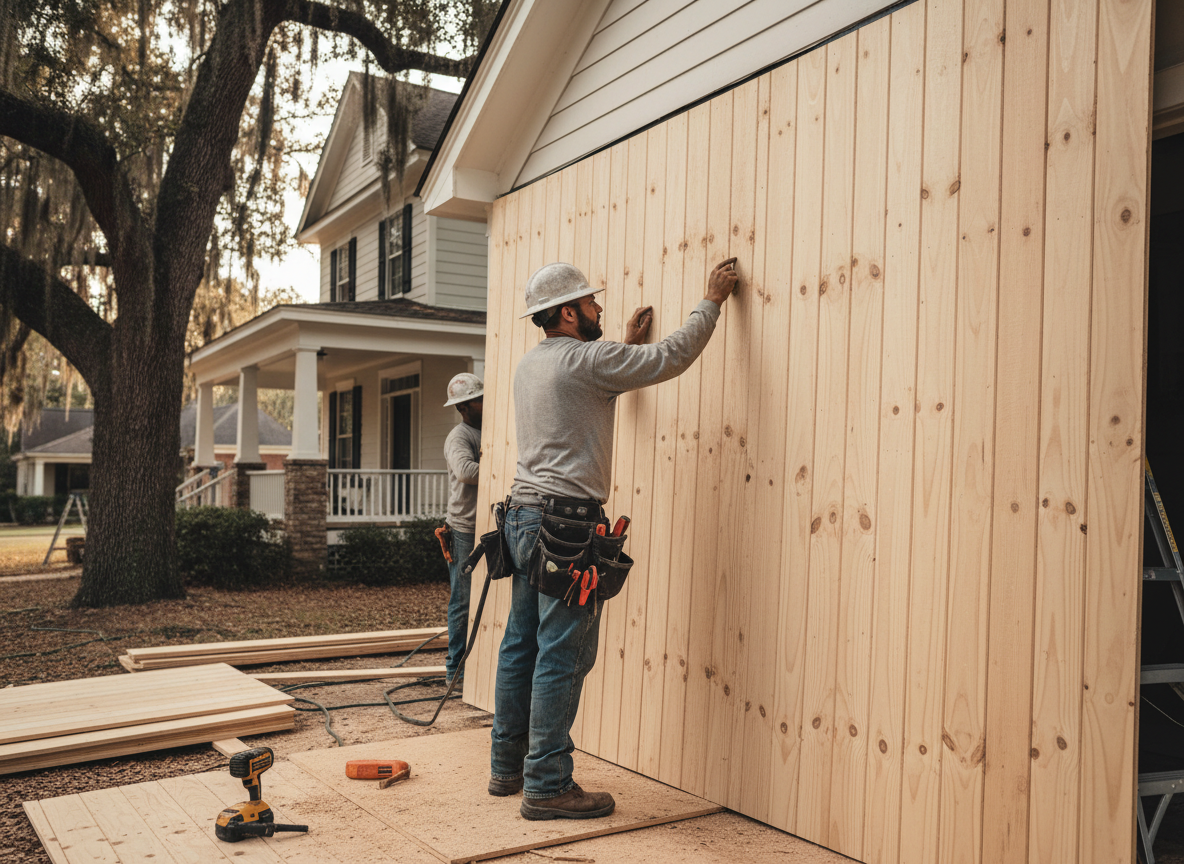
T-111 siding is grooved plywood that requires careful sealing at every joint and edge to prevent delamination in Montgomery's humid subtropical climate. Homes built from the 1970s through 1990s in neighborhoods around Montgomery often have this material over older sheathing that has absorbed ground moisture from clay-heavy soils. Proper installation includes a minimum 1/4-inch gap at the bottom course, galvanized or stainless fasteners, and caulking that accommodates seasonal expansion when summer humidity peaks.
Replacing damaged T-111 panels means first checking for rot behind the siding caused by roof runoff or poor flashing around windows common on Montgomery ranch-style homes. New panels must be primed on all six sides before hanging, and any replacement work near the Alabama River floodplain requires extra attention to weep holes and drainage planes. Skipping these steps leads to recurring mold and fastener pop-out within two seasons.
Code requirements in Montgomery County call for exterior wall assemblies to meet current wind-load standards, which often means upgrading the nailing schedule when re-siding older structures. Voltiva Systems inspects existing housewrap condition and recommends adding a rainscreen layer where original sheathing shows water staining from past storms.
Homeowners frequently overlook the need to re-caulk vertical grooves annually; once water enters the grooves it travels behind the panel and saturates the bottom plate. Addressing this during initial installation with high-quality polyurethane sealant extends service life significantly in the local weather pattern of heavy spring rains followed by hot, humid summers.
Technician insight
In Montgomery, the thing that catches most people out with T-111 siding is how quickly the grooves collect water during our heavy spring rains and then hold it against the plywood for weeks in the humidity; the bottom edge then wicks moisture straight into the sill plate on homes built before modern rainscreen practices.
T-111 Panel Replacement on South Elevation
Water had entered through unsealed grooves on a 1980s Montgomery home, softening the bottom plate. We removed three courses of T-111, replaced the rotted sheathing and added new flashing, then reinstalled primed panels with full perimeter sealing. The homeowner now has dry walls and no further swelling after the next rain cycle.
How it works
- 1
Site Assessment
Measure all elevations, note existing sheathing condition, and check for rot at sill plates common in Montgomery homes.
- 2
Material Selection
Choose exterior-grade T-111 with appropriate thickness and confirm fastener type for local wind exposure.
- 3
Preparation
Remove damaged panels, replace compromised sheathing, and install new flashing at windows and doors.
- 4
Installation
Hang panels with required gaps, apply sealant to all edges and grooves, and verify drainage plane continuity.
- 5
Final Inspection
Walk the job with the homeowner, confirm all penetrations are sealed, and review maintenance needs for Montgomery humidity.
Pricing
Cost depends on square footage, extent of underlying damage, and whether full elevation or spot repairs are required.