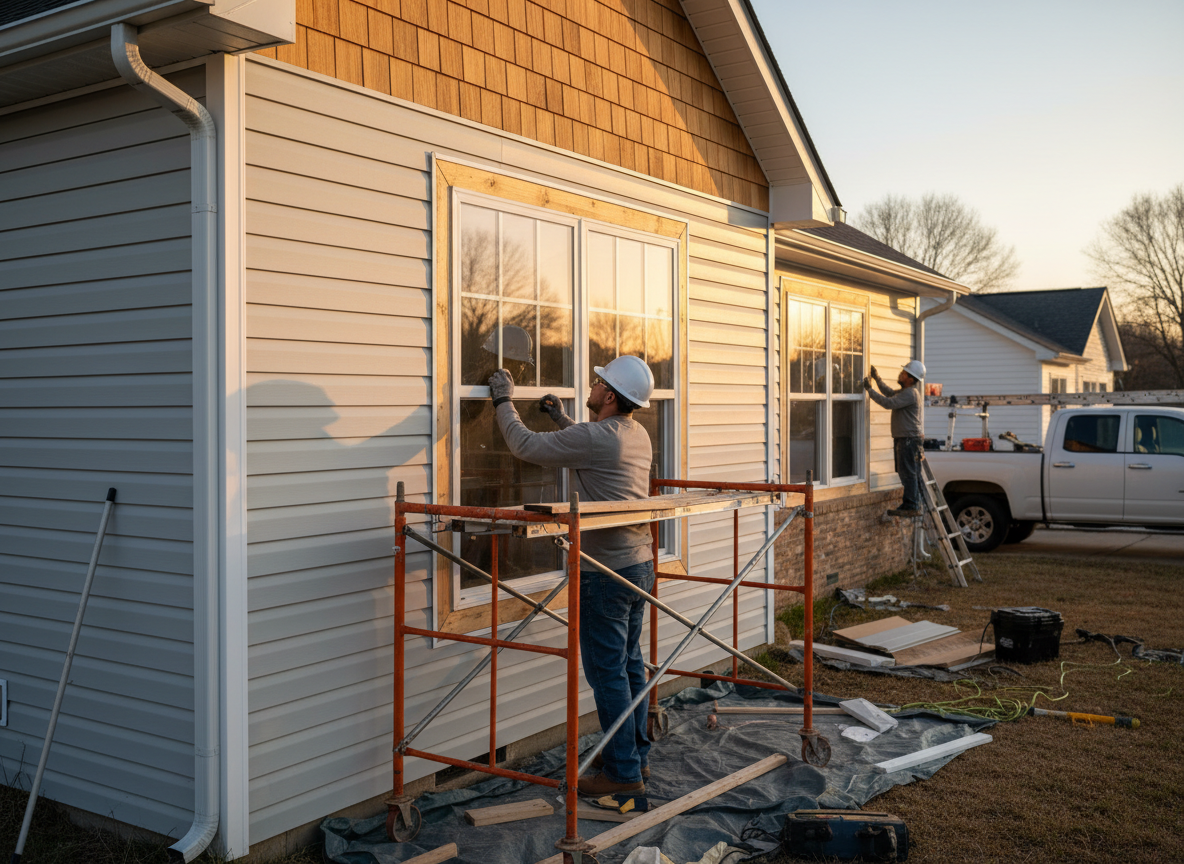
Montgomery sits in Hamilton County with many mid-century ranch and two-story homes whose original wood siding and single-pane windows now face Ohio's repeated freeze-thaw cycles. Proper removal of old layers often reveals deteriorated sheathing and inadequate flashing around the abundant gable-end windows common in these neighborhoods. We inspect for moisture intrusion at the foundation line where clay soils hold water against the siding, then install new housewrap and self-adhered flashing before any new material goes up. This sequence prevents the rot that spreads quickly once winter temperatures drop below freezing and spring rains arrive.
Vinyl, fiber cement, and engineered wood each react differently to the area's humidity swings and occasional high winds. Fiber cement requires precise nailing schedules and expansion gaps on south-facing walls that receive the most sun; skipping these steps leads to cracked corners within two seasons. Windows must be set in a continuous drainage plane that ties into the new siding, especially on homes near the Little Miami River where morning fog adds extra moisture. County inspectors check for these details on any exterior alteration, so the work must meet current energy code requirements for insulation and air sealing at every rough opening.
Homeowners often discover that replacing only the most damaged sections creates visible mismatches in color and texture that become obvious after one summer of UV exposure. Full elevation replacements maintain uniform appearance and allow proper integration of new trim and caulk lines. We also address the frequent issue of aluminum-clad windows whose thermal breaks have failed, causing condensation on the interior sills during winter mornings. Matching the existing roof overhang depth and eave returns keeps the architectural lines of Montgomery's established streets intact while improving performance.
Technician insight
In Montgomery, the thing that catches most people out with window and siding contractors is how the clay-heavy soil along many side yards holds water against the bottom course of siding. Older homes here often lack proper clearance or weep holes, so rot starts at the foundation line during the first hard freeze and spreads upward before spring. We always pull the lowest row first to check for hidden damage.
Siding Buckle on North Elevation
A Montgomery homeowner noticed vinyl panels bowing after a January cold snap. We found failed housewrap and missing step flashing behind the original siding. After removing the damaged sections and installing new self-adhered flashing tied into the window sills, the new fiber cement siding went on without future moisture traps.
How it works
- 1
On-Site Assessment
We examine every elevation, check existing flashing, and note soil contact or drainage issues typical along Montgomery streets.
- 2
Material and Scope Review
Homeowners receive clear options for siding profiles and window styles that suit the age and style of their specific property.
- 3
Weather-Resistive Installation
Old material is removed, sheathing is repaired, new flashing and housewrap are applied, then windows and siding are set in sequence.
- 4
Final Walk-Through and Cleanup
We verify operation of all windows, confirm drainage planes, and remove all debris from the yard and driveway.
Pricing
Upfront quotes reflect material choice, number of openings, and any sheathing repairs discovered during removal; no hidden fees after work begins.